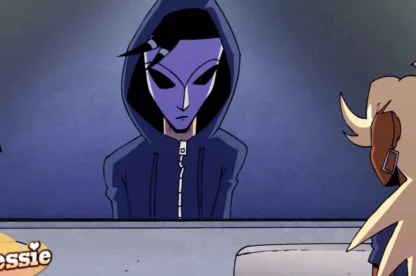
HOW IT REALLY HAPPENED: “Attack of the Deepfake”

Security Topic: Calendar Invite Phishing + Deepfake Audio
NINJIO Season 11: Episode 11
The fake calendar invite from episode 1110 sets the stage for a deepfake-audio attack, where a cloned CEO voice convinces the CFO to hand over a verification code, highlighting how easily urgency, obedience, and deepfake audio can override caution.
TEACHABLE TAKEAWAYS
- Attackers can create convincing fake meeting pages. Always check the website address (URL) before joining or signing in.
- Do not click meeting-chat links for urgent logins. Open sensitive documents by going directly to the known app, company portal, or trusted bookmark.
- A familiar voice is not proof of identity. Deepfake audio can make a fake request sound like it came from a trusted leader or coworker.
Additional Reading
- Cybercrime News Recorded Future North Korean hackers targeted crypto exec with fake Zoom meeting, ClickFix scam – The Record
- Fake Calendly invites spoof top brands to hijack ad manager accounts – BleepingComputer
- Fake calendar invites hit thousands of businesses in Microsoft credential phishing campaign – TechRadar
- Phish: Fraudulent Zoom meeting invitation – University of Toronto
- How scammers built a fake Zoom call from real videos of PM Wong and other Singapore leaders – Channel News Asia
- Malicious event invitations delivering ScreenConnect malware – Duke University
About NINJIO
NINJIO reduces human-based cybersecurity risk through engaging training, personalized testing, and insightful reporting. Our multi-pronged approach to training focuses on the latest attack vectors to build employee knowledge and the behavioral science behind human engineering to sharpen users’ intuition. The proprietary NINJIO Risk Algorithm™ identifies users’ social engineering vulnerabilities based on NINJIO PHISH3D phishing simulation data and informs content delivery to provide a personalized experience that changes individual behavior.